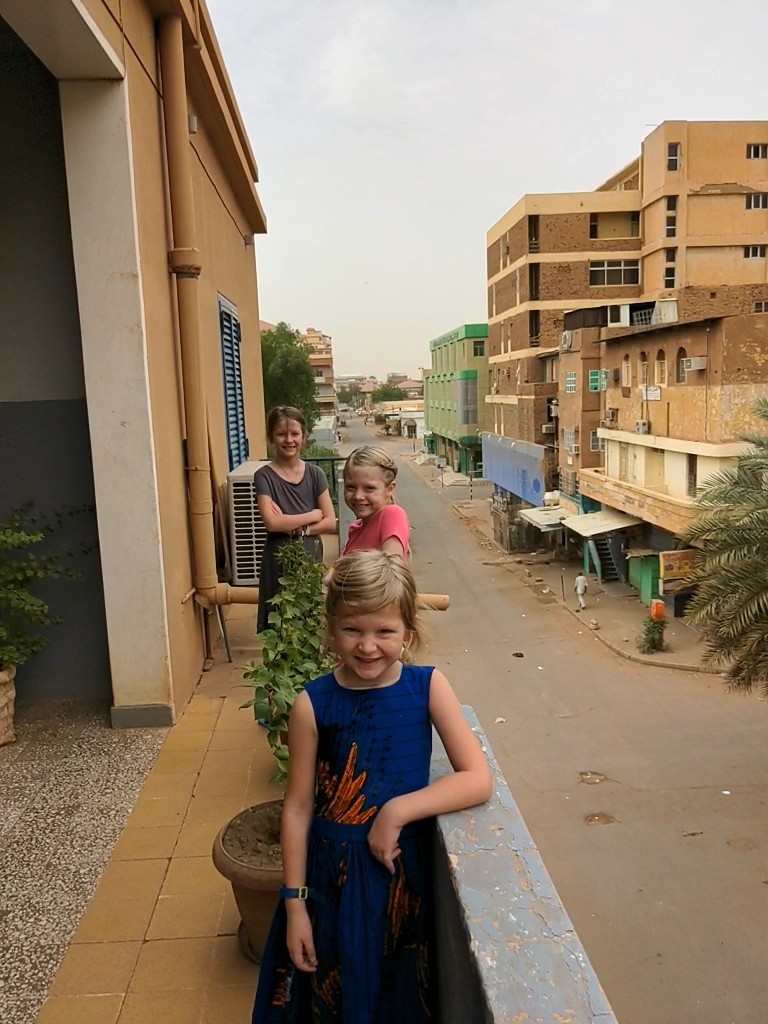
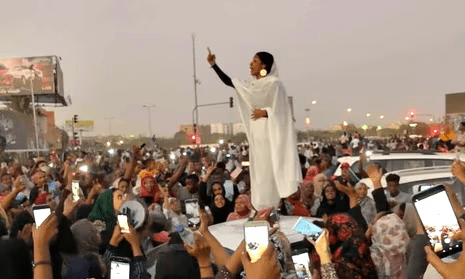
One day, from my hotel balcony, I saw men being beaten with whips as they were loaded into the backs of trucks. Two women were among them, dressed in brightly colored tobes, seeming more like guests at a wedding rather than participants in an anti-government protest. Except that they were so calm, so completely in control of themselves. When the mob had suddenly rushed down the small street our hotel was perched on, I hadn’t initially seen them in the fray. But now they sat on the sidewalk just below me as the men were being taken away, a tiny island of colorful calm in the midst of hysteria. The younger one was hurt and sat grasping her ankle with bangled wrists. As the truck bed was slammed shut a policeman approached the women and raised a rubber hose over their heads. He struck the wall behind them over and over again, making explosive cracks that echoed down the dusty street. The women never flinched.
Eventually, the policeman spat on the ground, and turned around. He raised his eyes and looked directly to where we sat, frozen in our sweat. A freelance journalist we had met over breakfast was staying in the room next to ours. Like a hero or a fool, he had a Canon tucked up to his scrunched face and was furiously snapping photos. The policeman raised his fist at the man (who quickly slunk back behind sliding glass doors) and shouted. But after a moment’s hesitation, he simply jumped on to the wheel well of the truck as it roared away, leaving us on the hotel balcony and the women on the empty street.
Days like that one are among those that come back to me on the mornings that I sit down to write without much of a plan for what I want to say. I feel like a beach comber in my own mind, walking the shore of my consciousness, stooping to pick up the fragments of memory that catch my eye and rinse them off with words. Some, like this one, lie half buried in the sand and I have to nudge them out with my toes. They have remained unwritten until now not just because they are tender to reflect on. Mostly, there are things I haven’t explicitly written about because it wasn’t always prudent to put it into words openly at the time. Or because I cringed at the thought of them being mishandled. There are reasons why many of these experiences have been fairly private, both practically and personally. Sometimes you don’t want to create undue concern. And sometimes you just can’t yet see the forest for the trees.
But here a couple years out, in the bittersweet stability of my quiet house far away from these memories, I find myself thinking about many things I have never written about. Talked about from time to time, yes, but never really carved into text. Also, I think a lot about the dear friends on the other side of that Whatsapp message or Zoom call who live these stories even now. They still have to be careful about what they say where and when. These days, I feel like giving attention to this strange collection of treasures I have gathered is a small hat-tip in their direction. (I see you. Your stories are yours, and mine are mine, and theirs are theirs. But I taste it all with you still. I remember.)
I remember how we had been drinking tea and playing Go Fish on the balcony that morning in Khartoum. We had been advised to lay low that day. No more checking out potential schools for the girls. No more visiting with partners discreetly at coffee shops in the city. No slow drives through neighborhoods to daydream about where we were going to live. No long strolls through Omdurman market where scarf salesmen stood upon long tables and beat a rhythm on drums to prospective customers. No boat rides down the Nile at sunset.


I remember the black puffs of smoke marking the horizon like waypoints that day. The staccato pops of gunfire constantly in the background, sometimes closer (eye contact with Russell over the girls’ heads then), sometimes barely audible. But always there. The power was off which made the hotel room insufferable, so we sat on the balcony where at least the heat was alive, moving, breathing on us. We ordered tea. It came milky, in white cups and saucers reminding me more of British East Africa than the Sudan we had come to know so well in the bush. We were in the city now, not the refugee camp. The city where there are places like hotels run by Greeks who have been around since Independence.
I remember we were playing cards with the girls to get our mind of the mounting unease. At the time I would have said it was unease about the day, about how our two weeks there were going to play out. Was that a security official at the tea shop across the street from us, or just a random guy who liked to hang out there every day? How much did it really matter one way or another? I didn’t know for sure.
But an embryo of doubt was planted that day too, doubt about more than just this trip. Will we be able to come back, to live here as we’ve always dreamed about? What if this really is all heading to hell, like the journalist next door says it is. What if we can’t get back. Or,…what if we can? What then?
Eventually the teargas wafting softly in on the breeze became too much for the girls. I remember daughter number three, only five at the time, crying while her sisters laughed with worried eyes. Why are our eyes stinging? Yes, you can go inside and watch cartoons on my phone. Yes, go ahead and have a snack. We have a while before lunch.
The girls were inside when the frightened crowd that we hadn’t yet seen that morning swelled and scattered from the main road into our street. Security forces cut them off from a side alley. They were cornered right below us. At some point the woman with the hurt ankle must have fallen. Or been struck. I didn’t see what happened. But in mere minutes – maybe only seconds – we went from stifling stillness, to a riot of chaos. And then almost as quickly, back to stillness again.
That moment feels frozen in time, like a suspended metaphor of my life in many ways. There I was, in the literal center of the upheaval and yet hanging above, completely untouched. I felt fear for my children who were utterly safe, holding damp washcloths over their mouths and noses to ease the burning while they watched Peppa Pig somewhere behing me on the starched white sheets of a King sized bed. I could hear the gunshots, feel the iron gaze of armed men, and yet – in this moment at least – I was out of reach. Trembling and safe. Vulnerable and protected. Participant, but really, nothing more than a bystander. An outsider briefly let in.
A few minutes after the truck left, the older woman helped the younger woman to her feet which were now bare. She carried the sequined heels she had picked out for the day and began to limp away, supported by her friend. I remember a sound like laughter coming out of my mouth as they walked away and tears dropped into my rattling tea cup. Those were the shoes she had chosen to wear to the streets to speak out against oppression and injustice that morning. Those were the shoes she had been prepared to be beaten or raped in. Of course they were. No self-respecting Sudanese woman would have done otherwise.
As they walked away from us the older woman raised one hand to the air and began to sing a resistance song.
I remember that day. Like a stone I keep rolling around in the palm of my mind, not willing to put it in my pocket or throw it back in the water. I remember feeling relief and anxiety, hope and fear.
And inexplicably, envy.
I remember thinking, I don’t know if I can live here.
And also, I don’t know if I can live without being in community with these kinds of women.

 Far From My Mountain