Long Swims

I recently discovered this post that I wrote seven years ago as a guest on a friend’s blog. It’s always a bit disorienting to be vibing with something you’re reading before you even recognize it as your own words. Regardless, in this season of thankfulness I’ve been thinking of many of you, my own boat people, so I thought it was worth a reshare.

***

Has anyone else been obsessed with the story of Ben Lecomte in the news recently, or is it just me?

I came across a blurb about him a couple weeks back and was so mesmerized by what I read that I have been following him ever since. I literally sent him a good luck email when he first started out – “There’s a mom and three girls praying for you from Africa! Be safe!” (He didn’t write back.) I check his blog on a regular basis. The past week it has been daily blurbs about jellyfish and seasickness and really cold water.

Why?

Because Ben Lecomte is currently swimming across the Pacific Ocean. Not sailing. Not rowing.

With a snorkel, really thick wetsuit and some fins…..swimming.

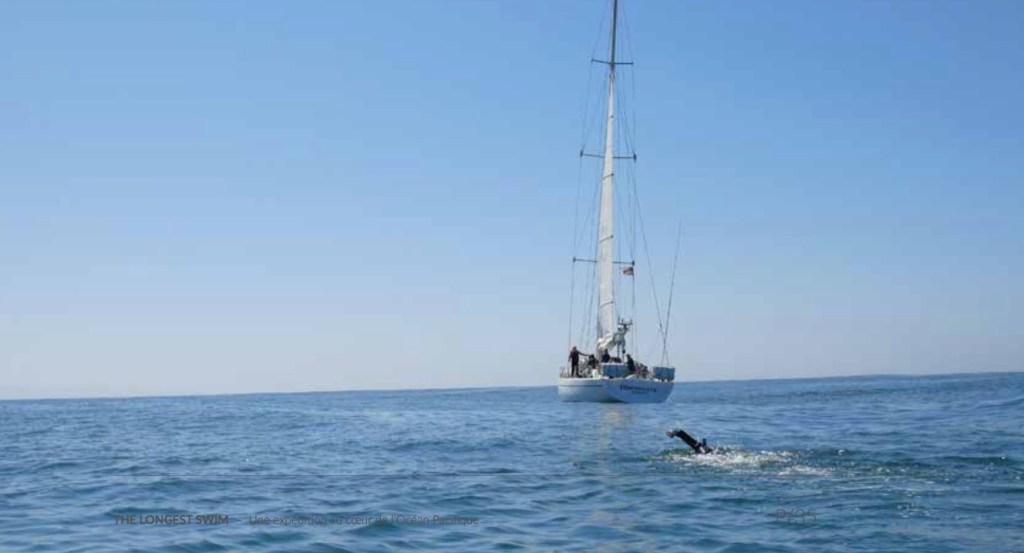
Lecomte is swimming to raise awareness about human impact on oceans, to test the limits of human endurance, just to see if it can be done. He estimates this 5,700 mile expedition from Tokyo to San Francisco will take about six months. He swims eight hours a day. He burns about 10,000 calories a day. He wears a bracelet that emits a magnetic pulse to repel sharks. (Because, as if 30 foot waves and 50-degree water weren’t daunting enough he will be swimming right through migration areas of great whites).

Chances are, when you and I drink our morning coffee and scroll sleepily through the news, he is swimming. When we putter down the road in traffic, he is swimming. When we take a hot shower or slow jog or snack break he is either preparing to, recovering from, or still ceaselessly swimming.

Now, whether you think that is a little bit stupid use of your time (like my husband) or an incredible test of the human spirit (like me) either way he’s doing something undeniably impressive.

But as it turns out, so are the eight people in the sailboat behind him.

Because even though he may be the only guy in the water all day, he is not the only person spending half a year on the open ocean eating dehydrated vegetables. There is a whole team of people keeping him healthy, focused, funded and, quite frankly alive. There are people who monitor his heart-rate, keep an eye on the weather, warn passing ships not to plough over the guy in the water. They sail the boat he sleeps on, communicate with the outside world, and spend hours each day bobbing along in a lead dinghy so he can keep an eye on something other than the watery horizon and stay true to his course.

Ben Lecomte is a part of a team. And without them he would be dead in the water.

Boat People

For the better part of the last decade I have been a worker among refugees in North Africa. It has been both far less exotic and far more so than it sounds. There have been more days than I care to admit that I have thought, “Ah, so this is it how it all ends. So much for that.” And many other days where I have been brought to my knees by the honor of getting to witness what God is doing in parts of the world that most of the world never sees.

It is breath-taking.

It is gut-wrenching.

And without a team of people in boats all around me I would have been dead in the water a long time ago too.
The longer I live the more I realize that life calls for a team of boat people. Because, whether or not God calls you to a refugee camp in North Africa or a small town in Arkansas, a board room or a baby’s bedroom, a hospital on the West Coast or a clinic in Southeast Asia, if you are swimming with Jesus, you are in for a really long swim.

And long swims call for boat people.

Many of you reading this are my boat people. Sometimes you have jumped in the water with me and helped me keep pace: you’ve listened to me process over skype, you’ve engaged the emoticon ridden Whatsapp messages at midnight, you’ve loved on my culturally-confused kids, you’ve given sacrificially, you’ve come to visit.

And many more of you may never even know my real name. But you have written a few encouraging words that I carry around with me like a pretty stone in my pocket. You’ve prayed, even if just in passing, for my family and the people we live with who you will never meet this side of heaven. Through your love and prayers and support in one small way or another, you have been a boat on the horizon showing me which direction to keep kicking towards.

For your presence in the water with me I am eternally grateful.

The sea is teeming with swimmers.

We all take our turns cheering from the hull of the boat and coursing through the water on our own, rotating rhythmically through our own seasons in the life of faith.

It’s tempting to join Elijah on the mountain some days, on our faces before a whispering God in a cave. We’ve all felt his words in our own throats. “I am the only one!” And the same voice that breathed into Elijah’s ears breaths into ours: Oh Child, I have thousands upon thousands….

Together, from the most impoverished refugee camps in the world to the greatest cities on earth, there are swimmers. Men and women new to the water need your prayers cheering them on from the boats beside them. And I assure you, there are many people out there whose lives you could only struggle to imagine, who are calling out blessings from the boats beside you.

Keep swimming.

Keep loving your enemies, turning the other cheek, blessing instead of cursing, welcoming little children, giving only to Caesar what belongs to Caesar, grieving with those who grieve, rejoicing with those who rejoice, denying yourselves, praying, washing, asking, seeking, knocking, and straining ahead for that narrow door.

Because we are doing it together.

May God continue to bless you and yours as you live for him.

Sheep, and the First Principle and Foundation

This Friday is Eid. It’s the big Eid, the one when people commemorate Abraham’s audacious obedience to God by displaying his willingness to sacrifice his son on the mountain of God.

So, naturally, there’s sheep everywhere. Bless them. Small flocks gathered under trees in empty lots, standing meekly by while men exchange bills and drink coffee. Huge herds, picking their way across highways brought to a standstill by their number, taxi drivers chain-smoking patiently as the last muddy lamb frolics across the X20. A small pickup has even been making its way through my upscale neighborhood, it’s bed weighed down with fat black and white sheep. Yesterday, the driver and his teenaged son led one particularly stout one down the ramp and into the bougainvillea arched front gate of my neighbor’s home where I can still hear it occasionally bleat from their back garden as it waits for Friday. Sorry, dude.

Even from the dentist’s office on Monday, I could see a huge herd streaming through an empty field. I don’t know why it struck me funny in the moment. I was sitting there in an air-conditioned high-rise office, staring out the wide glass window and holding a pack of ice to my cheek. I could hear the neat clicks of the keyboard the dentist was typing on behind me as she hummed slightly to the latest hit from Cairo playing on the speaker overhead (“Do you know this song?” she had asked me while she carefully wrenched out the pieces of my broken root moments before, “The music video is so good.”) The city skyline rippled on the left, the saline lake that borders the sea on the right. And then a long stretch of undeveloped land stretching out in front of me, peppered with industrial waste and wildflowers. And about 50 sheep, prodded gently forward by their shepherd in the heart of this sprawling capital city.

Only two days left of school. Only five days left of Bryan being gone. Only a couple weeks before we head back to the US for a visit. This week we have been to high school graduations and goodbye parties and my Whatsapp inbox is full of messages from people I’m so excited to reunite with soon. Always something ending and something beginning. And is anyone else wondering how the heck is it June already?      

One ending I reached this past week was completing the Spiritual Exercises. This nine-month process has been so rich and I am endlessly thankful for my spiritual director and the community with whom I got to walk. I would be lying if I said I ended the daily formation practices with the same gusto with which I started into them. But I think that’s probably ok. I’m guessing Ignatius intended for the Exercises to bleed into real life anyway. And they have. They’ve left a forever mark on the way I show up in it all.

Oddly enough, one of the most impacting pieces I am walking away with is the “First Principle and Foundation” – basically Ignatius summary thoughts on what it all means. A simple document on why we’re all here. What the heck we’re supposed to be doing.

I know, the “First Principle and Foundation” sounds about as exciting as plain whole-wheat toast (which, someone recently dubbed as “the most serial killer thing” about me – I could eat plain toast all day long). Regardless, it somehow hit the mark with me. I want and I choose what better leads to God’s deepening his life in me. Yes, that.

You can read the traditional translation here. But I put it in my own words a while back and they’re just below too.

Eid Mabruk everyone! Finish strong. Start with peace. Thank you God for sheep.    

 ***

The First Principle and Foundation:


We were made for love and from love, and to love we will return. The task before us is to release into that love fully, to realize it in our lives as thoroughly as possible.

All things work together and are held together in and for this love. Everything is usable for love if we let it be. So we must figure out how to hold on and how to let go, for the sake of love.

Take a step back from it all, create a little distance so that we can see, hear, feel, and sense God and how he is moving in everything. The distance allows us to be less affected by matter and matters of this life. To be more tender only to the Spirit.

Because all is love, we can rest full-heartedly into the life God has given us. We don’t have to yearn for the Good Life in any form.

All is grace. All is gift.

Sunday

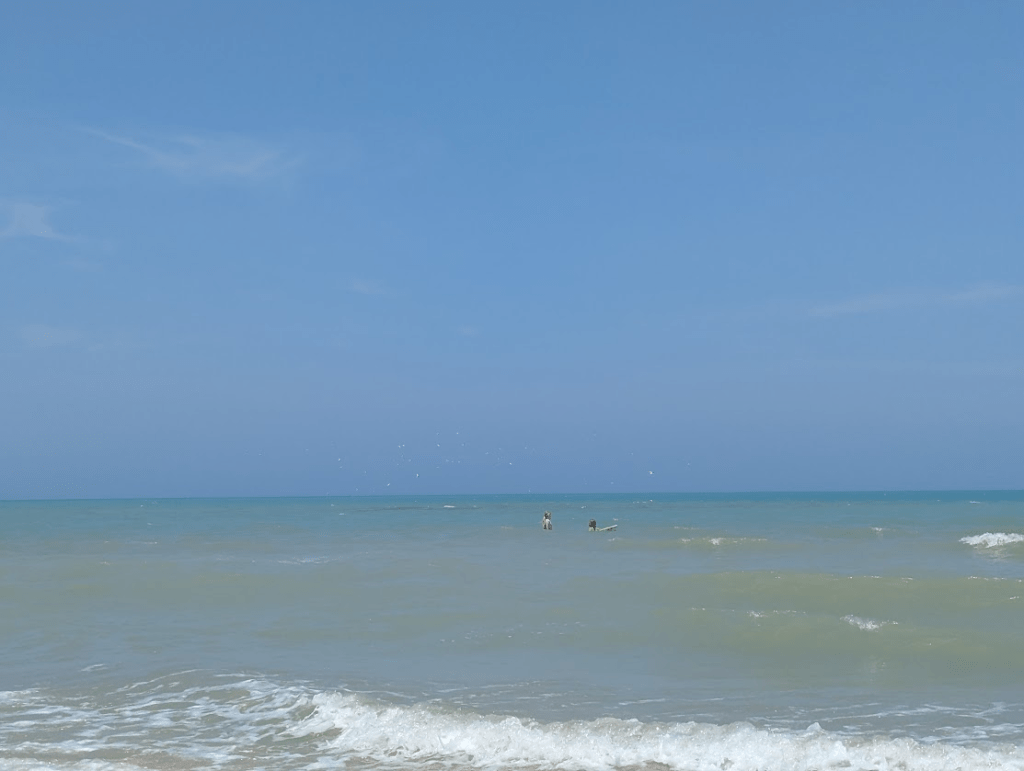
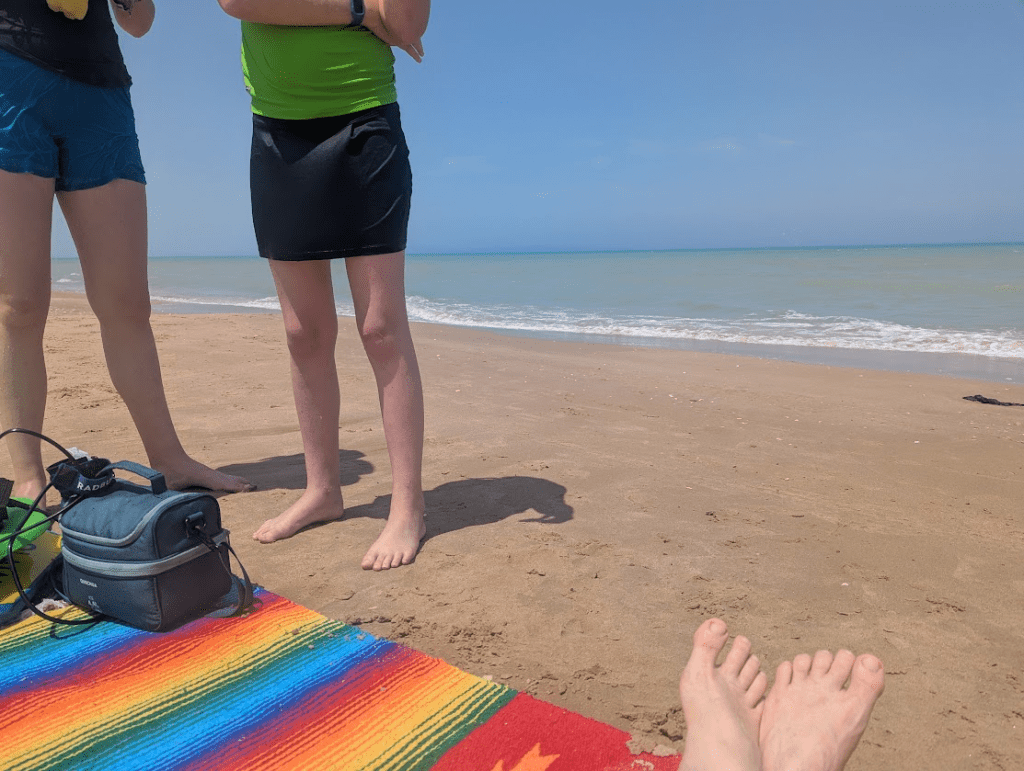
I’m writing this sitting cross legged on a striped blanket spread across damp brown sand. It’s funny thinking of you reading these words for the first time in Times New Roman on a screen somewhere very far away. But for me, these words are being born onto the lined pages of a weathered notebook already half-filled with prayers, poems and grocery lists, scrawled in lead from a pencil I found buried at the bottom of my purse. My daughters are playing in the surf in front of me, three wet heads bobbing in water so green it looks like it is glowing, like it’s backlit from a sun shining from below rather than above. They are threading their way cautiously towards a wide shadow deeper out, above which a flock of terns hover and dive. The birds and the shadow are a paradox of continual movement and perfect stillness, white wings shattering the boundary between sky and sea over and over again.

The shoreline to my left is empty. It follows the curve of the bay towards some high-rise apartment and beach resorts that feel far away. To my right a group of fishermen in waders are pushing their truck out of the sand where it’s stuck. Beyond them are several other families, also picnicking. It’s mostly kids in the water, mothers under sunshades or on blankets like me. Fathers standing ankle deep in the surf watching. It’s the warmest Sunday of the year so far but the water is still chilly. I told the girls not too go too far out (I’m only getting in if someone is really close to dead!). I can’t hear their voices now but I’m watching them as I write. From their movements I don’t think they can touch the bottom anymore, strong arms stroking ever further out. The older two are ferrying the youngest perched on the boogie board like it’s a palanquin.  

We’re at the beach this morning because I felt like the sea could tend to my soul a bit better than our beloved Anglican gathering could today. Soft sadness has been a close companion this week. Russell and I have been a part for twelve days many times before but it’s felt more bleh this go around – probably because he has to turn around and do it again next week. (Which I feel the need to say, was no one’s first choice. War has a tendency of screwing up everyone’s best laid plans and tweaking a travel schedule is the least of many concerns.) But I both actively miss him and pre-emptively miss him, a terrible combo.

It’s also the time of year when so many of my peers have parents flying in for end of school stuff, grandparents coming in to see the musical and graduations and the kick off to summer. It’s so beautiful and brings me very real joy. But, a particularly sadness that I generally keep locked away like a family heirloom – protected, not worn – begins to knock gently on the inside of its sealed treasure box when I hug my friend’s beautiful mother. Something asking to be let out. And I don’t know if what I feel in those moments is the thing inside the box, knocking, or the awareness that even if I wanted to open the box, I have no idea where I’ve put the key.

And then, I’ve got a freaking tooth problem. Yes, an embarrassingly small thing in light of war and terminal illness. But as long as I’m just writing this in an old notebook on the beach, let me just admit honestly: I feel like crap about it. Some crunchy woo-woo wellness person that I like says we store our grief in our hip sockets. I’ve also read we hold trauma in our vagus nerve. So I’ve decided that I must store shame in my teeth. Why else do I get a toothache and then immediately start brewing on all the people I’ve let down. On what an imposter I surely must be. Does anyone have stress dreams about their teeth falling out of their head? I was in enough pain on Tuesday that I did my three least favorite things all at once (Talk on the phone, in another language, to a dentist) and made an appointment. And apparently I have a broken root up in my gum under an old crown. So dental surgery seems to be in my near future. Sadness.

I think a new role in our organization is a part of the weight in my heart too. And this is confusing because it is a level of responsibility that I’m excited about. Something I think I’ll be good at. That I feel led to by the Spirit. But it comes with newness. And that newness hovers over my bed as a shadowy figure at night and whispers unkind things. Things that I think lead to dreams about teeth falling out.

So all that to say, over breakfast, I suggested the beach instead of church to three shocked and delighted bedhead girls. We read the daily lectionary (Acts 11 – Peter using the “but it’s not Biblical!” line on a God who keeps blowing our minds with how big this thing really is), communed over quinoa crackers and expired grape juice as mother and daughters, (sisters), then grabbed sandwiches and towels and drove to the edge of the city.

Gammarth beach is not the most glamorous spot on the Med. The broken glass and occasional pile of industrial waste used to bother me a lot more than it does now. But really, there’s almost no way to tarnish the majesty of this spot. Sitting here, looking out at this water, this curve of the coastline, I imagine all the Amazigh, Phoenician, Carthaginian, Roman, Arab and French that have taken in this view in the millennia before me. People have been soaking this salty air for a long time. And I think we all must have felt some of the same things. An erosion of our sadness. Maybe also our fear.

Something in my peripheral vision catches my eye. An old man has come out of the small dunes on my left and is arranging his belongings next to him on the sand. He stands facing the sea for a moment, Eastward, and I watch him watching whatever it is he is watching for a moment. The birds maybe. Or my girls? Then he bends at the waist, hands to his knees. He kneels, face to the sand. He’s praying. Each movement of the rakat is much longer than I have seen it practiced at the mosque. He is face down for a long time. Then he rises to kneeling, and again is still a long time before returning to standing. Over and over again he moves through his prayers. A completely traditional form practiced in an untraditional way. Long, slow, solitary prayers by the sea.

My attention is drawn back to the water as the girls’ voices re-enter my sphere of hearing. They are wading in, bright and excited, the boogie board flapping behind the youngest like a kite as they splash to shore. Fish, they are squealing. Thousands of tiny silver fish. Just there. And the birds all around us, just diving and eating. They swam over the top of the board, they were dropping out of the sky. There were so many birds and fish! Mama, the fish!

It’s pure magic. Like literal magic. Something completely new to their experience. A little scary, out there treading water with living things swirling above and below, flying and swimming and falling and jumping. But magic.

As they turn to run back into the waves, I am suddenly bowled over by the sheer bounty of it all. The overwhelming more-than-enoughness. With my vaguely throbbing jaw, alone on my beach blanket, I can’t say thank you enough. The husband I feel like I can’t live without. The living saints I have for parents who are deeply connected at every turn of my life. The fact that a tooth extraction is likely the worst physical thing to happen to me this year, (and done in a place with amazing medical care no less). Work that I would give my life to over and over again. (Reading those verses in Acts this morning – yes Peter, I see you. Who am I to stand in the way of the Living God. The world needs to hear these stories!) And the people I get to do it with. That riot of proto-women squawking in the water (now one is cuddled next to me, rippling the rim of her paperback with her wet body). It’s mind blowing.

All is well and all will be well and all manner of things will be well.

A thousand old metaphors that I can reach out and touch today – sands on the shore, birds of the air, as far as the East is from the West, the depths of the sea, more than enough fish.

I should be on my face in the sand too. We’re on the brink of everything. I dive and I splash down to eat, over and over again.                

(not) Normal

Perhaps is it because I have fallen woefully behind in my working through the Spiritual Exercises of St. Ignatius that my friend’s words on Facebook hit me like a punch to the gut yesterday.

While I joined in with much of the world celebrating the joy of Easter Sunday this weekend, I dropped right back into “Week Three” of the Exercises Monday morning where Jesus is still in the process of dying. Slow, deliberate reflections on the painful suffering of our Lord each morning. I can point to the Zoom meetings, girls’ volleyball games and hosting guests all I want, but bottom line, I didn’t keep up the pace with my reading schedule, so now I get the whiplash of moving from the angels and Empty Tomb right back to Roman soldiers and the Cross this week. I don’t think Ignatius meant for this point of the Exercises to be pastels and roses, but I must admit, it’s feeling especially heavy.

Maybe that’s why my friend’s post, tucked between college friend’s family pictures and TikTok nonsense, struck a chord with me. It said this:

“Jesus – a Palestinian executed by a European empire colonizing his land two thousand years ago – is resurrected in the 200,000+ souls murdered in Palestine by another European empire. To believe in God and stay silent in the face of genocide is to crucify him all over again.”

Whew. Good morning, Monday.

***

This past week we hosted some guests from the US. They were deeply lovely people. Generous, thoughtful, and curious. But I realized it’ been a hot minute since I have been around wealthy American Christians outside of wealthy Christian America. And I was really struck by this word “normal”. Whether explicitly spoken, or merely implied, it seemed to me that everything was held up to a standard of “normal”.    

Wow, this cup of coffee is so much smaller than normal.

It’s crazy how mattresses here are so much harder than normal.

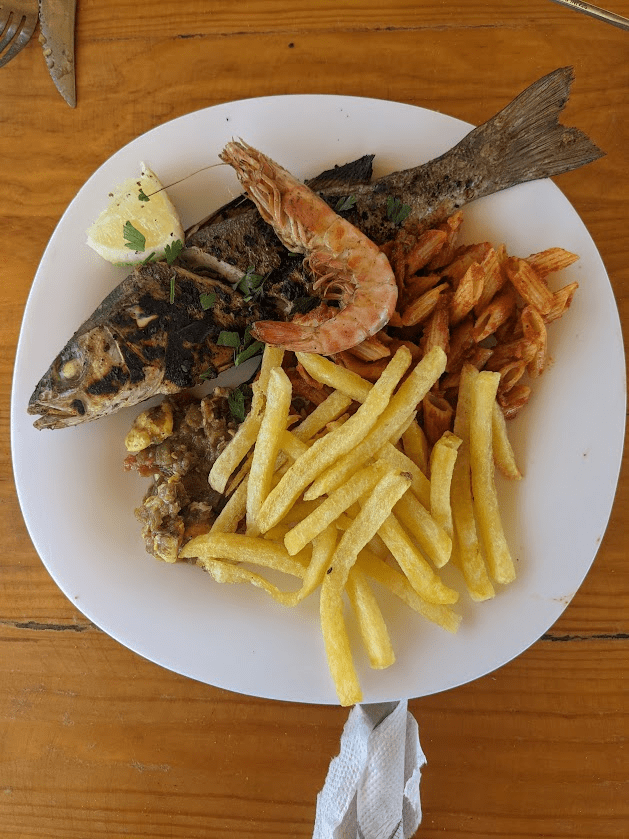
Why is this fish served with its head on? (Is that normal?).

It helped me see again this curious temptation that we all face at some level: how we see it is normal.

Now, let me point out, as a firstborn daughter Enneagram 9 third culture kid, normal is my jam. My life is one long fake it ‘til you make it or die hard trying pursuit of normal (or its closest attainable replica). Middle of the road is my very favorite part of the way we’re going, be it tarmac, dirt or mud.     

And living cross culturally has only given me more opportunities than the average person to confront my own assumptions of normal, of which I continue to have plenty (I may or may not have cried walking down a mile-long couscous aisle when we first moved here crying “Dear God, where is all the rice?”). It’s just that at this point I have a rolodex of “normals” to scroll through when confronted with new perplexities. And somehow, I keep needing to add to it.

Because, friends, there’s no such thing as normal.  

Somehow, at least in my mind and heart today, there is a thread here that ties back to my friend’s Facebook post.

Where I live, to be a person of faith, a person with any kind of moral sensibility, means you passionately advocate for the rights of the Palestinian people and are horrified at the Zionist Israeli government. It’s not an issue people are debating. It’s the assumed perspective of any good person. You might say it’s normal. (And by the way, that’s Christians and Muslims alike.)

I have deeply beloved friends that believe to be passionately anti-abortion is the normal response of any follower of Jesus. It’s not even a question that gets discussed as much as a factory setting of faith and moral conviction. I know you love God, so I know what you must believe about this.

Maybe normal isn’t the best word for it. It’s more like the default assumptions of whatever circle you are in. Or litmus tests, the answers to which tell me just about all I need to know about where you stand with God.

Perspectives that make us feel normal and right and safe.

The trick is, those litmus tests are always changing. In the early church it wasn’t whether or not you could be gay and be a Christian but whether or not you could be a soldier and be a Christian (and the general consensus was, no). Not so long ago, it wasn’t whether you could genuinely love Jesus and be in the Make America Great Again camp but whether or not you could read the Bible in any language other than Latin (especially if you were wary of the stake). Do you own slaves? Do you believe in evolution? Do you have to be circumcised? Can women preach?

On and on Love is pouring itself out in time and space and culture and people (because, that’s the only way it comes) and we have had to figure out what to do with it. And thank goodness, because these things matter. Please don’t hear me saying that they don’t.

Truth and goodness and justice and the things that deeply delight God and the things that deeply offend God are real.

But if you are looking around our world today and easily feeling a sense of righteous contentment about everything you believe, there is a decent chance you are not paying close enough attention.

Normal isn’t America. Normal faith isn’t American Evangelical Christianity. Ours is not the standard to which the world is compared. In ways that are both beautiful and horrifying, we are a blip on the radar of history. Celebrate what is good in that. Grieve over what is simply awful. But don’t be seduced by the allusion of normalcy. Don’t too quickly assume ours (whoever “us” is) is a timeless orthodoxy.  

We are not the center or the beginning or the end but rather those who briefly pass the baton from the great cloud of witnesses behind us to the epochs of unwritten generations still ahead of us who have journeys we can’t yet imagine. Be courageous and faithful as you wrestle out this life. But by gosh, be humble as you do it.             

Because this Spirit of Love that breaths through the ages is stepping across all of our lines like it’s a hopscotch board drawn in sand. And he continues to gently roar through every place and people and controversy –

You are beloved.

You are beloved.

You are beloved.

It’s all bigger and truer and more terrifyingly beautiful than all the small beliefs we’d rather cling to in order to feel safe.

***

Jesus is still hanging on the cross in my readings this week. And it feels like a lot to sit with him there through it all.

But I know he’s not going to stay there. He rises again and again, pulling Timelessness into our time, Word into our words, Spirit into our bodies.

Whatever resurrection he is calling you to, keep running towards it with grit and humility. Whatever meal he is invited you to taste, eat with curiosity and faith. What is outside of our scope may yet nourish and delight. Even if it has a head on it.

Coals

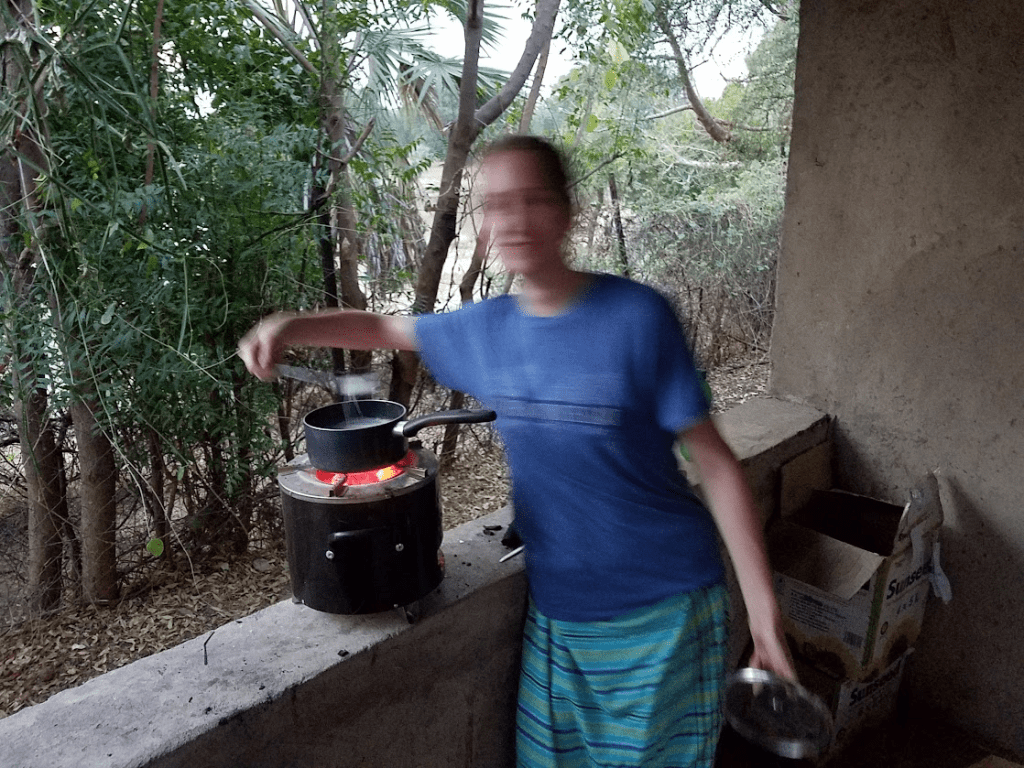
Mary always woke up earlier than I did in Sudan. So many mornings when I filled the kettle with water from the filter by the back door, one of our girls would trot over to her porch in their nightgown, the metal tray of our charcoal stove swinging by her side. Mary, naked baby boy balanced on her hip, would wave a greeting to me across the way and then, removing the steaming kettle from her lit stove, she would carefully scoop a couple of coals from her fire with a long spoon and place them in my daughter’s tray. My girl would then pick her way back across the compound to our porch, both eyes on the coals she balanced carefully in front of her.

Many late afternoons while her babies napped or chased chickens, Mary would lilt gracefully across the space between our houses with her metal bakhur basket, (neither motherhood nor refugee camp life would ever remove the ballerina from her body or soul). She would lean cross-armed against the cement half wall, barefoot and chatty, while I dug into my own fire with a long spoon, charcoal grating against itself in the chamber like pumice, before clinking neatly onto her outstretched basket.

This ritual was repeated for years. Breakfast fires and dinner fires. Or, I just had unexpected guests drop in, do you have a fire going? Or, I saw you were later getting back from the camp tonight, so I sent some coals over with your girls.

It was a task that became a ritual that then morphed into a metaphor. Daily grunt work slowly evolving into liturgy. A chore canonized.

My fire is cold. Can I use some embers from yours?  

***

By the time we moved away from the Sudans and to where we are now, just under three years ago, I was squarely the keeper of my own coals.  

People think the hardest things we have been through have to do with bullets and bombs and thieves in the night. And admittedly those moments haven’t been awesome. But without a doubt, it’s been the separation from people I love which has left the most lasting mark. Jonathan Haidt says, “People don’t get depressed when they face threats collectively; they get depressed when they feel isolated, lonely or useless.” I’ve felt a lot of things in the red and blue sectors of the wheel of emotions chart over the past decade and a half. Lonely has almost never been one of them.  

Until recently.

Over and over again, as consistently as the waxing of the moon, God has provided friends at just the right moments. Neither the worst nor the best seasons of the past 16 years have been faced alone. And over and over again, as consistently as the moon wanes away, one by one we have said goodbye. And sometimes we haven’t even had the opportunity to do that.

Heather, Lydia, Bethany, Melva, Bre, Jessica. Katie…

The overnight goodbyes of rushing to the evacuation planes that take us to different places and never returning to our old neighborhood. The babies born with devastating challenges that led to the long strange drift of a goodbye. The change in roles and location that have been marked with full-hearted, cry-just-as-hard-as-all-the-kids kinds of goodbyes. The goodbye that wasn’t even a goodbye but just an unexpected Whatsapp message from a mutual friend: “I don’t know how to tell you this but she didn’t wake up this morning. She’s gone.”

All that to say, when we showed up here and started settling into a new community, I was pretty set on sitting out the sisterhood part of life for a while. Maybe not consciously at first, but the instinct was real. No, I don’t want to join a ladies group. No, I’m not eager for new teammates. No (thank you), I don’t want to go to coffee with you.

I’m pretty self-sufficient on most fronts. I’m an introvert. My husband is my best friend. I’m fine (clearly). Friendship – the kind that pushes beyond chit chat at school pickup – is nice and all. But early on I decided it was 100% not worth the heartache on the other side of the goodbye.

Don’t mind me over here fanning the crap out of this dead wood. It’s just ash in my eyes.    

***

You and I both know that was an absurd place to land and that my resolve wouldn’t last. And it hasn’t. But it has taken almost three years for that to change. I told Amalie (my German Spiritual Director) the other day with both tears and laughter falling over each other in a race to get out of me, “I don’t think I’m grieving anymore. But I think I am grieving finally letting go of my grief. Is that a thing? Does that make me neurotic?” She smiled and said “Does it feel like healing?”

I thought about that for a second and decided that no, it doesn’t. Healing makes me think of perfect baby skin where there once was leprosy. Or of cool skin where there was a raging fever. This feels more like new life. Like the living Jesus letting Thomas feel around the purple edges of his scars. Alive again where I was dead for a little while. But the scars are still there. He kept his. He lets me keep mine.

And, as it turns out, I’m not the only one who has them.

This month I have taken a step deeper into community with a group of women I care about more than I want to admit. And their hearts have some wear and tear too. Collectively, we have close to a century’s worth of living cross-culturally. And though in some ways we are starting afresh with each other, in other mysterious ways there’s a built-in familiarity. It’s a little like dropping in at the 10-year mark. Yes, I still have so much to learn about these women, and I confess I had a bit of a vulnerability hangover when they discovered this blog. We’ve got a ways to go yet. But we’re steppng into this pre-seasoned, pre-aged. As though there is something already built.

Because even if I wasn’t the one there when K’s siblings died, someone was there prostrate on the floor with her. And even if J wasn’t the one walking quietly beside me as I took in the gutted shell of my war-looted home, there was someone who did that for me. We haven’t always been each other’s people – through the dramatic stuff as well as the years worth of dumb jokes and hurt feelings. And, God help me, I know there may come a time when we won’t be able to be each other’s people in the same way anymore either.

But it feels to me like we are accepting the batons of friendship from those women who have gone before us in each other’s lives. They’re holding out a wire basket of glowing coals. We know how to do this.

I know how to do this.

And I feel happy and grateful. And I cry.

If one were to look closely, they could see the inside of my right wrist is lined with a number of literal scars from the edges of scalding cookie sheets pulled carelessly from our old beast of a charcoal oven. Sometimes I’m a little embarrassed of them; they kind of look like evidence of delayed onset juvenile angst. But I mostly love them. They are tiny, tangible reminders of a life that sometimes feels like a dream. They tie me to what was. But also what is, now. And what may yet be. Not healed exactly. But alive.

Lemon Tree

A lifetime ago, the wife of our favorite bush pilot gave me some advice I have never forgotten. Her husband’s job kept him away from home sometimes weeks on end (especially when muddy airstrips grounded his plane or sporadic guerrilla wars meant he was on constant standby to get us people out safely). During times like this she was back in Nairobi with their three daughters who were sad that dad was off again hauling timber and boxes of dehydrated vegetables for some poor shmucks or evacuating them out one more time, even if it was Christmas Day (for which said shmucks are eternally grateful). She told me, “You know what though? When Jim is gone our biggest priority is to have fun. The girls and I miss him but we flip the script. Dad’s gone? Let’s play! It makes us dread the time apart less and helps the days pass more quickly.”

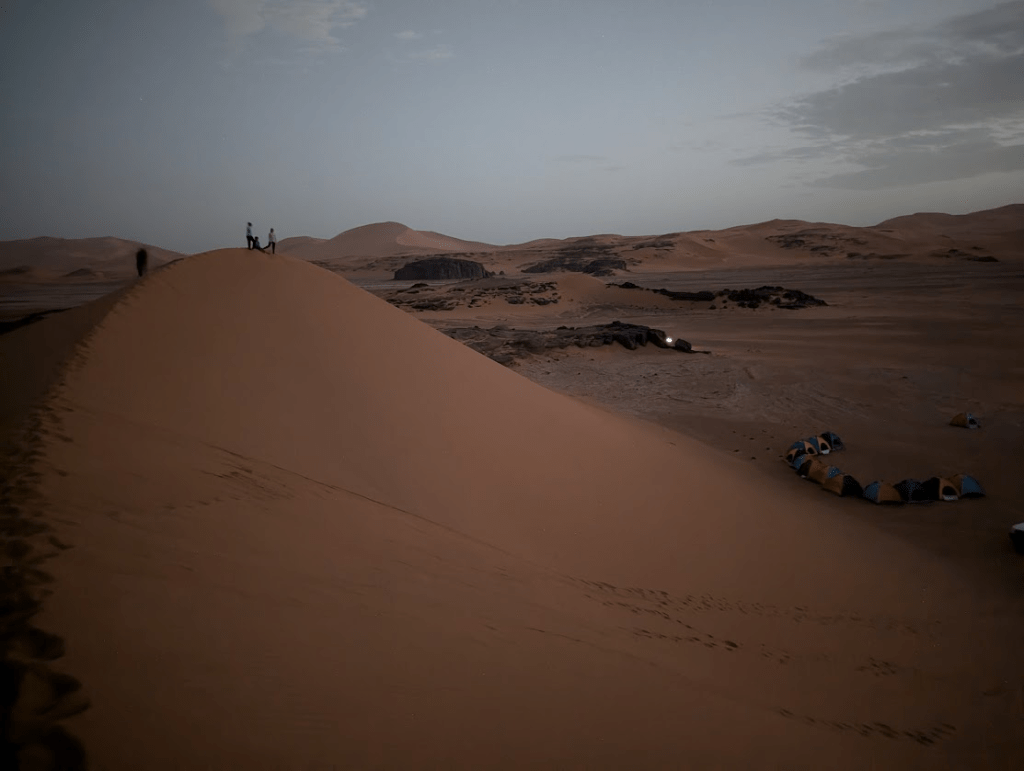
Over the years I’ve tried to embody this sage advice but it’s not always easy. There is one very clear fun parent in our household and let’s just say, ce n’est pas moi. The first time I left on a work trip from here, Russell and the girls were settling into a second rate traveling Italian circus before my plane left the terminal (which admittedly looked kind of fun once I unplugged my animal rights and children’s labor and education laws radar). They’ve gone to see Carmen at the local opera house, done the nighttime amusement park and celebrated Moolid with some local Sufis. The last time I left, he took them camping.

In the desert.

In Algeria. (Granted, mixing work and play on that one, but you get the idea).    

Perhaps it’s not so much that I’m not fun as much as, by and large, our family has that particular base covered. I think during solo parenting stretches, my contribution to the family ecosystem is something more in the category of cozy. Russell left Sunday evening for West Africa and after a round of glum goodbyes, we are settling into our familiar rhythms of girl house. The weather has been breathtaking lately – cool mornings opening up into days that feel carbonated with sunshine. We took sketchbooks outside on Sunday and doodled under the lemon tree while I was caught up on middle school gossip. We cooked dinner together tonight. We played cards after homework. Most evenings we watch an episode or two of Brooklyn 99.

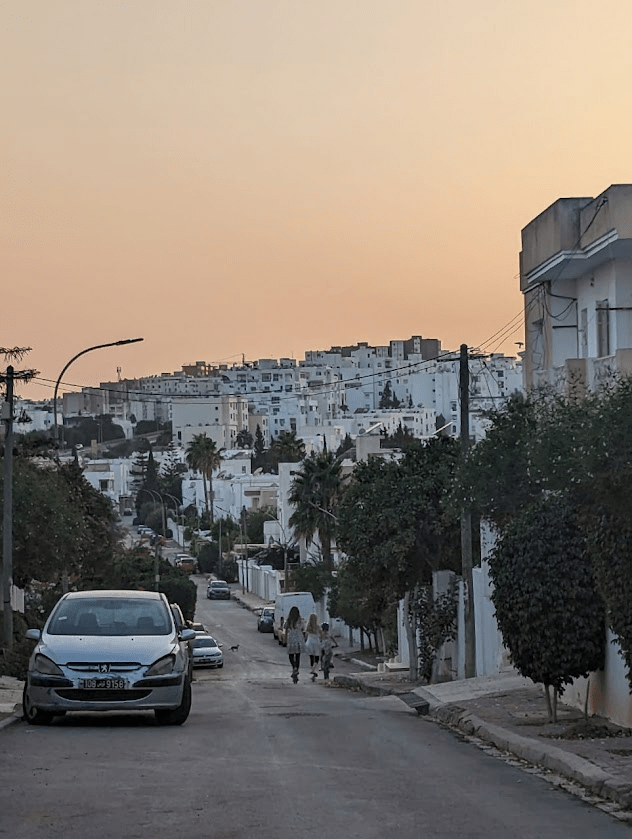
Ramadan means that ordering delivery sushi to eat on the roof or walks in pajamas to the ice cream place aren’t as easy to pull off as usual (standard trademarks of our girls’ weeks). But we have enjoyed slow twilight walks around the neighborhood as the call to prayer marks fast-breaking. The entire world is silent in those moments; not a soul is out. I know full well every house for hundreds of miles in most directions is packed with families eating together. But it’s easy to imagine I and my three daughters are alone on the planet, tracing our way through narrow streets in an abandoned city of white walls under a lilac sky.

The simplicity that comes with solo parenting can be a gift. Zoom meetings get put on the backburner as laundry and school lunches step up to the plate. Co-regulation is a high calling for mothers in out-of-the-ordinary seasons and I don’t mind the slowing down.

The slowing down is a welcome opportunity to metabolize last week too. A lot of hard things are happening to people we love and lead. War is rumbling in the places that were once home and those who live there now are calling the pilots of the bush planes, stashing trunks in the ceiling boards of their houses, trying to explain to their babies why they have to go. In the messages back and forth, my friends say to me – You’ve done this before. How do you talk to your kids about this?

Another colleague had her phone ring in the middle of the night a few days ago, that call that makes us all sick to our stomachs. In it she learned that her baby brother on the other side of the world had taken his own life. I sat with her at the kitchen table while her babies watched cartoons in the next room and I felt the crushing weight of my own wordlessness while we wept. What do I tell me kids? she asked.  

It’s been a heavy week.  

***

I started this blog yesterday and cringe a bit as I click “publish” this morning, rushing out the door to all the waiting things. The thoughtful conclusion to my meandering words didn’t reveal itself in the night as I hoped it might. But I set out to write once a week, for my own soul as much as anything and if you are still reading, blessings as you ride the stream of my consciousness. Perhaps next week there will be more cohesion.

Rilke says only write if you feel like you will die if you don’t. That feels a bit heavy handed to me, even for a German mystic. But he’s probably on to something. So here we are. This space is one where my sorrows and memories, joys, mundane moments and deepening belief in the Beautiful scratch themselves out.

Blessings in your own scratching it all out today too. Whether working and resting, grieving or laughing, feasting or fasting, may you feel the roots stretching ever deeper.

There is only one way: Go within. Search for the cause, find the impetus that bids you write. Put it to this test: Does it stretch out its roots in the deepest place of your heart? Can you avow that you would die if you were forbidden to write? Above all, in the most silent hour of your night, ask yourself this: Must I write? Dig deep into yourself for a true answer. And if it should ring its assent, if you can confidently meet this serious question with a simple, “I must,” then build your life upon it. It has become your necessity. Your life, in even the most mundane and least significant hour, must become a sign, a testimony to this urge.

Beware of general themes. Cling to those that your every- day life offers you. Write about your sorrows, your wishes, your passing thoughts, your belief in anything beautiful. Describe all that with fervent, quiet, and humble sincerity. In order to express yourself, use things in your surroundings, the scenes of your dreams, and the subjects of your memory.

Lentamadan

We are now a week into Ramadan. A little less than that into Lent.

And already all of me – soul and spirit, joints and marrow – is inflamed with the richness of days marked by prayer, baklava, and sleep deprivation.

This is Lentamadan. A holy month of fasting when this quite Christian family in a fairly Muslim world brings the hems of their spirituality together in a strange tableau of faith. I grew up observing neither Lent nor Ramadan, and as much as my Church of Christ DNA pushes me to hold all religious rituals with an open-handed skepticism (well, “other” people’s rituals anyways), it is also the hunger pang that drives me to other tradition’s doors, eager to sample the flavor God takes on at their tables.

I once asked a Muslim friend how she would feel for me to fast Ramadan not only as a mark of solidarity with my neighbors but also as a spiritual discipline as a follower of Christ.  The answer was unequivocal. Of course! It would be almost more offensive for it not to be a spiritual discipline. This is a time we all draw closer to God and to each other. Fast. Pray as you do. You are welcome.   

Of course, like every society that weaves religion a little too tightly into their culture, there are places that chafe. The first couple of days of Ramadan are not unlike the holy days leading up to Christmas – a holy nightmare. Day one is usually full of goodwill and the milk of human kindness as everyone is bonded in their hunger and anticipation of the breaking of the fast that night, waiting in line for the best cut of lamb at the butcher or giving cheerfully to the usually high number of beggars threading through traffic jams. But by day three, those caffeine and nicotine withdrawals have amplified the growling stomachs to a fever pitch and you are just as likely to get the finger as you are a blessing.  

But by now, the days have settled into a routine as though the entire world has taken on a new circadian rhythm. Days inhale and exhale quietly as though sleeping. The nights pant with life.

Suhur comes early. Well before dawn the first call to prayer rings out and all who will eat or drink before the sun rises pull themselves out of sleep and down to the kitchen. Some families eat leftovers from the big Iftar meal the night before. Our family groggily slurps back some cereal and yoghurt. Russell and I shoot back some black coffee, willing it to slow-release over the next 12 hours. We go back to bed for another 40 minutes, stomach bloated with as much water as we can hold to last the day.

For our family, this is a ritual of only once a week. Maybe it would be easier to just embrace the full experience and take on all 30 days. Perhaps someday. For now, we have all given up something for Lent and taken on one day of fasting Ramadan-style.

I’ve loved hearing about our girls’ experience of this kind of fast at school. The third grader who is determined to participate but really hates the felt experience of hunger is usually given encouragement and pointers for beginner fasters by her Muslim teacher as she is escorted to a resting area during lunch period. The 6th grader plays basketball with the Syrian and Tunisian boys during lunch because they are the others who are also not eating. The 8th grader fasts with her girls’ Bible study group. And then comes home casually referencing the good conversation she and her friends have been having about prayer, especially in light of (and with) the Muslim classmate who recently had an old woman come to her in a dream and speak scripture over her.

Even on the days we are not fasting, we show up in the world differently. Though this is a fairly secular nation on the categorical curve, it is still respectful not to drink in public, snack or chew gum. Women are supposed to tone down the makeup. Almost every restaurant and all 27 million coffee shops are closed. Office hours are unpredictable. 

But in that last long hour before sundown the world starts to come alive again. Families take walks in the neighborhood and joggers take a quick run, everyone moving their bodies in the final space before rehydration. Gangs of boys play soccer in the street, easing languidly aside when cars pass on the way to a relatives’ house. Our corner bakery and vegetable stand are overrun with last minute shoppers, fathers striding out with half a dozen baguettes under their arm, women with a basket of fennel bulbs in one fist, the hand of a small child in a school uniform in the other.

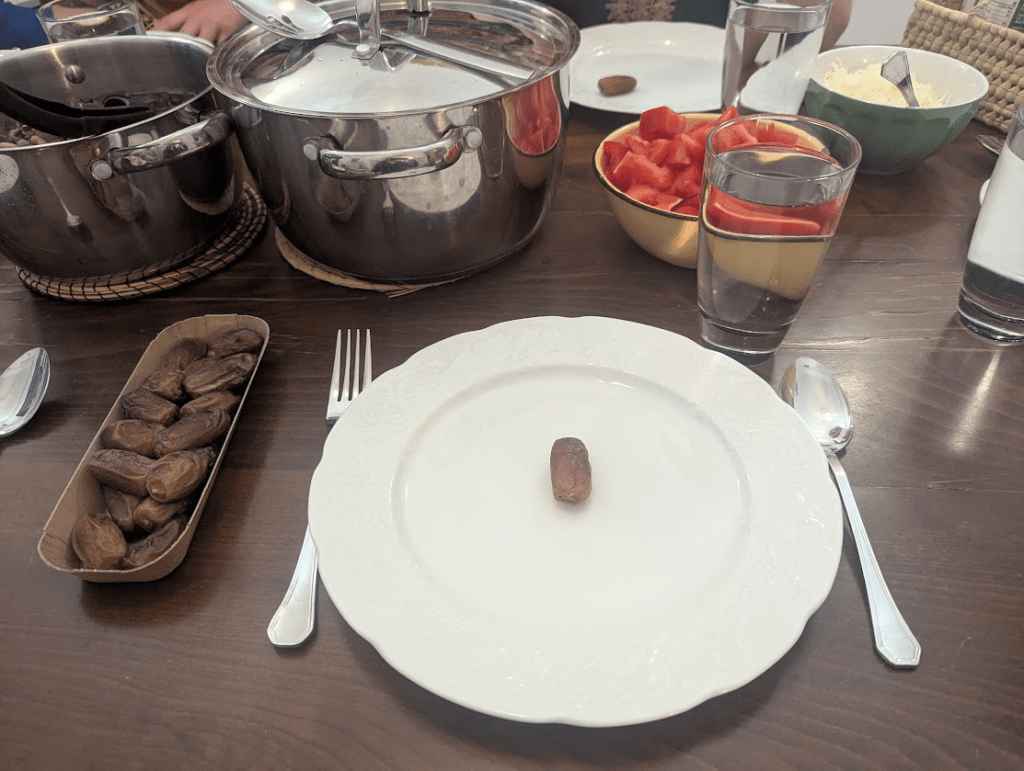
Cooking a big meal deeply hungry is a such a simple yet stretching thing to do. Doing it once a week gives me enormous respect for those who do it every night for a month. No snitching, no licking spoons, no taste-testing. Just slicing and measuring, sniffing and kneading. Then, we gather around our table, the food steaming in front of us. When the weather is warm, as it has been this week, we leave the window open so we can hear better. Before each plate is a tall glass of water. On each plate a plump date. The Koranic reading from our neighborhood mosque will have been going on for a good 15 minutes. When it finally quiets we all strain our ears. The entire city waits with bated breath. Every street is empty. Every home is full. You can easily believe that the entire planet is quiet, weighted with expectation. And then in the distance – boom – a cannon goes off. The signal that the sun has now officially set. We can eat.

Bismillah. In the name of God.

We drink. We eat a date (Or three. Tradition says the Prophet only ate odd numbers of dates so you can follow suit. If you’re into that kind of thing. Which we kinda are.)

And it feels so good. Full helpings over lingering conversation. And then a sampling of sweets from the confectioners across the street: makrudh, basbusa, yuyu, kunefa, samsa. Tea. Maybe some coffee, even though I know I will regret that come 5am tomorrow. By nightfall the streets are filled with people on their ways to prayers, to coffee shops, to parties and gatherings. I literally got caught in a traffic snarl up on the way to pick up one of the girls from a birthday party at 10pm the other night (even little kids birthday parties become late night affairs!).

Fasting is a kind of reordering of the world, resituating the ordinary back into its rightful place of awe. As daughter number two said the other day, “Mama, I never knew that a glass of water was so good until I spent the day thirsty.” There is no joy so small and so deep as looking at the bright red apple in the fruit bowl longingly and then realizing, I can eat! This was made for me. I’m alive.    

Some Christians find Ramadan to be a very dark season. I don’t want to be quick to judge – I agree that it is a very spiritually dynamic season. And not all spirits are of the Spirit. My own dreams this week have reminded me of this. So I approach this space with humility and caution.  

But.

I also think poor missiology can sometimes be mistaken for spiritual sensitivity. Ethnocentrism and bigotry-lite masked as theological orthodoxy. I can only speak to my experience of Ramadan – no more, no less. And to me, it is not dark. It is alive. Ripe with potential. Whether out of the lazy cultural conditioning we all fall prey to at times (and which God is very capable of using for his own purposes) or very real spiritual hunger, the world I live in is seeking God right now. And historically, God has gone to some pretty extreme lengths to be found.

Oh, that we might grant others the same opportunity of finding the risen Christ amidst the detritus of their own deeply cherished traditions as we have found him amidst ours. If Jesus has the humility to allow himself to be found amidst the nationalism, violence, racism, exclusivism and utter greed of the religious systems I represent, I will not dare to suggest he won’t show his face amidst the beautiful and broken trappings of the religious systems my neighbors represent. God has little snobbery in his appraisal of the various stepping stools we use to reach him. Nor does he mind sweeping these stools aside as we grow to see how little we need them. All of them.    

Ramadan draws us into dependence on God. Lent reminds us we are but dust. Everything we have comes from the hand of God. We are all in need of healing.

All is gift. All will die.

But right now, we are alive. And hungry. We live in this God-haunted world where he speaks to us in dreams and in written words and in the voices of our children and neighbors and strangers. He calls us into life beyond our lives. Beyond these bodies that carry us through the motions of our faith. Rested or barely making it through the day, with bellies full or empty, as Maverick City plays against the backdrop of the chant weaving from the minaret down the road, we pray. And we keep seeking.   

Khartoum, 2021

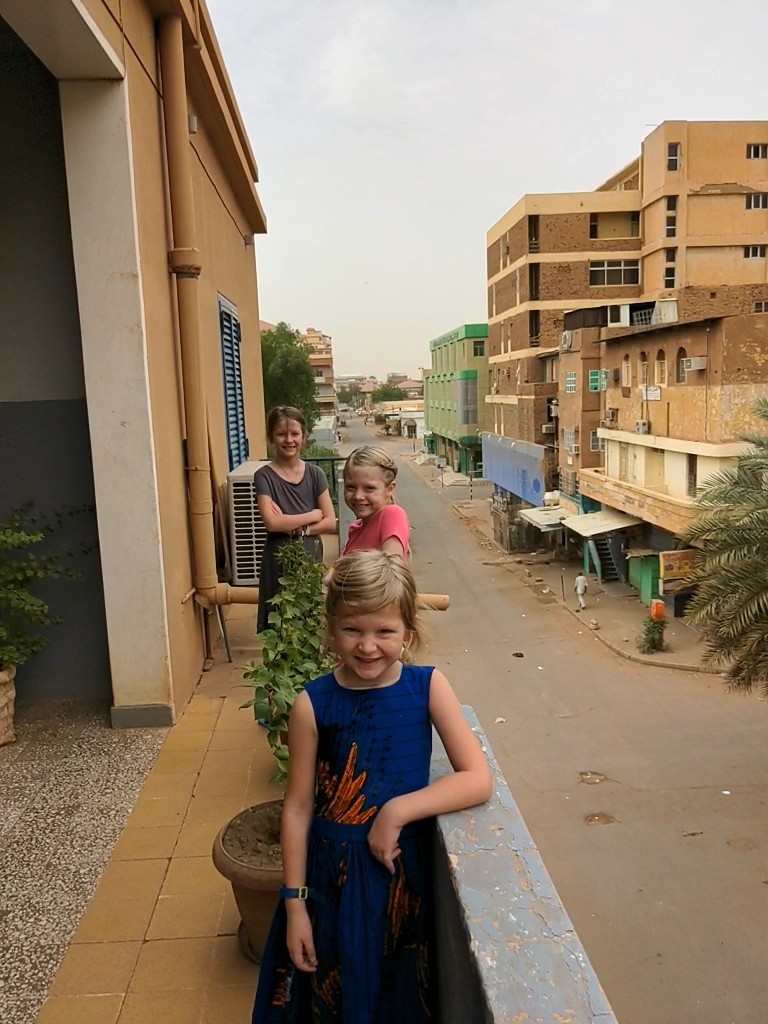
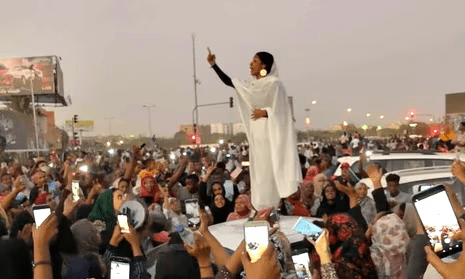
One day, from my hotel balcony, I saw men being beaten with whips as they were loaded into the backs of trucks. Two women were among them, dressed in brightly colored tobes, seeming more like guests at a wedding rather than participants in an anti-government protest. Except that they were so calm, so completely in control of themselves. When the mob had suddenly rushed down the small street our hotel was perched on, I hadn’t initially seen them in the fray. But now they sat on the sidewalk just below me as the men were being taken away, a tiny island of colorful calm in the midst of hysteria. The younger one was hurt and sat grasping her ankle with bangled wrists. As the truck bed was slammed shut a policeman approached the women and raised a rubber hose over their heads. He struck the wall behind them over and over again, making explosive cracks that echoed down the dusty street. The women never flinched.

Eventually, the policeman spat on the ground, and turned around. He raised his eyes and looked directly to where we sat, frozen in our sweat. A freelance journalist we had met over breakfast was staying in the room next to ours. Like a hero or a fool, he had a Canon tucked up to his scrunched face and was furiously snapping photos. The policeman raised his fist at the man (who quickly slunk back behind sliding glass doors) and shouted. But after a moment’s hesitation, he simply jumped on to the wheel well of the truck as it roared away, leaving us on the hotel balcony and the women on the empty street.

Days like that one are among those that come back to me on the mornings that I sit down to write without much of a plan for what I want to say. I feel like a beach comber in my own mind, walking the shore of my consciousness, stooping to pick up the fragments of memory that catch my eye and rinse them off with words. Some, like this one, lie half buried in the sand and I have to nudge them out with my toes. They have remained unwritten until now not just because they are tender to reflect on. Mostly, there are things I haven’t explicitly written about because it wasn’t always prudent to put it into words openly at the time. Or because I cringed at the thought of them being mishandled. There are reasons why many of these experiences have been fairly private, both practically and personally. Sometimes you don’t want to create undue concern. And sometimes you just can’t yet see the forest for the trees.

But here a couple years out, in the bittersweet stability of my quiet house far away from these memories, I find myself thinking about many things I have never written about. Talked about from time to time, yes, but never really carved into text. Also, I think a lot about the dear friends on the other side of that Whatsapp message or Zoom call who live these stories even now. They still have to be careful about what they say where and when. These days, I feel like giving attention to this strange collection of treasures I have gathered is a small hat-tip in their direction. (I see you. Your stories are yours, and mine are mine, and theirs are theirs. But I taste it all with you still. I remember.)

I remember how we had been drinking tea and playing Go Fish on the balcony that morning in Khartoum. We had been advised to lay low that day. No more checking out potential schools for the girls. No more visiting with partners discreetly at coffee shops in the city. No slow drives through neighborhoods to daydream about where we were going to live. No long strolls through Omdurman market where scarf salesmen stood upon long tables and beat a rhythm on drums to prospective customers. No boat rides down the Nile at sunset.

I remember the black puffs of smoke marking the horizon like waypoints that day. The staccato pops of gunfire constantly in the background, sometimes closer (eye contact with Russell over the girls’ heads then), sometimes barely audible. But always there. The power was off which made the hotel room insufferable, so we sat on the balcony where at least the heat was alive, moving, breathing on us. We ordered tea. It came milky, in white cups and saucers reminding me more of British East Africa than the Sudan we had come to know so well in the bush. We were in the city now, not the refugee camp. The city where there are places like hotels run by Greeks who have been around since Independence.

I remember we were playing cards with the girls to get our mind of the mounting unease. At the time I would have said it was unease about the day, about how our two weeks there were going to play out. Was that a security official at the tea shop across the street from us, or just a random guy who liked to hang out there every day? How much did it really matter one way or another? I didn’t know for sure.

But an embryo of doubt was planted that day too, doubt about more than just this trip. Will we be able to come back, to live here as we’ve always dreamed about? What if this really is all heading to hell, like the journalist next door says it is. What if we can’t get back. Or,…what if we can? What then?  

Eventually the teargas wafting softly in on the breeze became too much for the girls. I remember daughter number three, only five at the time, crying while her sisters laughed with worried eyes. Why are our eyes stinging? Yes, you can go inside and watch cartoons on my phone. Yes, go ahead and have a snack. We have a while before lunch.

The girls were inside when the frightened crowd that we hadn’t yet seen that morning swelled and scattered from the main road into our street. Security forces cut them off from a side alley. They were cornered right below us. At some point the woman with the hurt ankle must have fallen. Or been struck. I didn’t see what happened. But in mere minutes – maybe only seconds – we went from stifling stillness, to a riot of chaos. And then almost as quickly, back to stillness again.

That moment feels frozen in time, like a suspended metaphor of my life in many ways. There I was, in the literal center of the upheaval and yet hanging above, completely untouched. I felt fear for my children who were utterly safe, holding damp washcloths over their mouths and noses to ease the burning while they watched Peppa Pig somewhere behing me on the starched white sheets of a King sized bed. I could hear the gunshots, feel the iron gaze of armed men, and yet – in this moment at least – I was out of reach. Trembling and safe. Vulnerable and protected. Participant, but really, nothing more than a bystander. An outsider briefly let in.

A few minutes after the truck left, the older woman helped the younger woman to her feet which were now bare. She carried the sequined heels she had picked out for the day and began to limp away, supported by her friend. I remember a sound like laughter coming out of my mouth as they walked away and tears dropped into my rattling tea cup. Those were the shoes she had chosen to wear to the streets to speak out against oppression and injustice that morning. Those were the shoes she had been prepared to be beaten or raped in. Of course they were. No self-respecting Sudanese woman would have done otherwise.

As they walked away from us the older woman raised one hand to the air and began to sing a resistance song.  

I remember that day. Like a stone I keep rolling around in the palm of my mind, not willing to put it in my pocket or throw it back in the water. I remember feeling relief and anxiety, hope and fear.

And inexplicably, envy.    

I remember thinking, I don’t know if I can live here.

And also, I don’t know if I can live without being in community with these kinds of women.  

https://www.bbc.com/news/articles/cy7x87ev5jyo

Montserrat

For a more nuanced set of immigration reasons than I prefer to explain here, my family has to leave the country where we currently live every four months. Russell and I normally have enough work trips to get the required in and out stamps in our passports to keep us within the bounds of the law, but there comes a point once or twice a year when our daughters’ declining legality in-country lines up with a three-day weekend and we take a quick family trip across whatever border is cheapest at the moment.

This weekend it was Spain.

Brene Brown says that shame can’t survive being brought out into the open and I’ve realized that my comfort with talking freely about everything from anxiety and marriage counseling to typhoid and hemorrhoids is more self-disclosure than real vulnerability. But if the conversation moves to how well I still speak such and such language or how comfortable I would be with hosting friends from the refugee camp in the grand house I live in now, or take your pick of any other number of identity bruises and self-doubt grazes, and I feel a sour twisting in my stomach (not unlike typhoid).

One of these places that feels hard for me to talk about is how much we get to travel. Have to travel, yes. But, get to. I mean, honestly, who gets to live like this?

Granted, when the slightly sketch local airline sends out an email saying the flight is delayed by four hours (very typical) only to announce 30 minutes before boarding that the flight is back on time sending us panic dashing through midday traffic and over closed ticketing counters and past ticked off immigration officials (muttering new-to-me Arabic vocab under their breath) in order to be the dead-last people to board the plane by the skin of our teeth, it’s not glamorous. And when the 8:30pm flight home is predictably eased back to 1 AM on a school night and kids are doing homework on the terminal floor, it’s doesn’t feel anything like vacation.

But. Throwing a few changes of clothes and a pair of good walking shoes into a carry-on and casually slipping from one world into another is every bit as magical as you might think, almost more so now because it happens with so little fanfare, so little prep. Our lives are full and complex enough that trips like this tend to sneak up on us. One minute you are deep in a zoom meeting, loading the dishwasher, conjugating verbs in a language lesson, praying in traffic. The next it’s like you’ve tripped and fallen through a wardrobe and woken up trailing slowly behind your daughters as they walk down cobblestones at twilight, pointing towards a particularly unique spire on an old church to the background hum of an unfamiliar language.  

***

Every week for the past five months I have been meeting with a woman named Amalie. Actually, I’ve been meeting with Amalie far longer than that but we’ve only recently began moving through the Spiritual Exercises of Ignatius. Amalie is German, married to a Canadian, lives in England and worked for over 13 years in Yemen. She is a trained spiritual director and with her unique life experiences and insights, has been an invaluable conversation partner and witness to my walk with God in the past few years. (Early on in our relationship she mentioned the frog-in-the-pot experience of fixing a cup of tea while noticing your roof vibrate due to bombs falling on nearby towns, and I thought, now this is someone with whom I can unpack my questions for God.)             

The Spiritual Exercises have been a powerful experience for me (no worries if you don’t know what those are. I didn’t either until not that long ago. This is a book I am using and highly recommend.) It’s not rocket science or magic or mind-bending theology. Just a simple but dedicated practice of prayer and meditation each day. But it has pulled me in. Even in the utter privacy of my own interior reflections, I have felt the well-worn paths of the saints who have gone before me. In the untouched landscapes of my soul, there are mysterious grooves, handholds, fingerprints left by other pray-ers. This is an ancient way we walk. Even in the solitude of prayer, there is community.  

All that to say, when I realized how close we were to the mountains where Ignatius came to faith and wrote the Spiritual Exercises, I cast my vote in the family meeting for Spain.

***

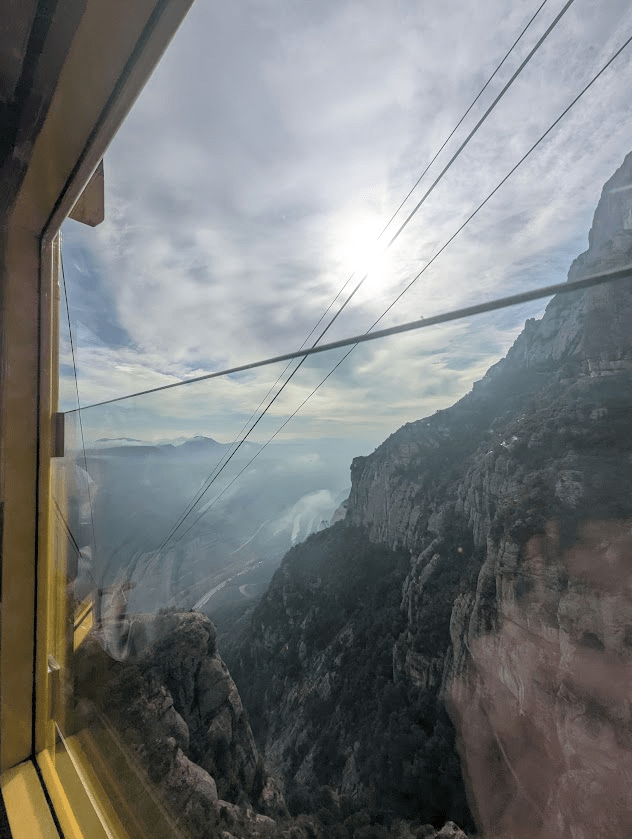
To get to the Monastery of Montserrat you must take a train out of Barcelona. It’s about an hour and a half journey, the roofs and spires of the city progressively fading into fields and hills. We stepped from the train almost directly into a yellow cable car that slowly threaded us high into the domed mountains towering around us. There we were, a dozen tourists (pilgrims?), dangling together in gentle ascent, the bald mountains crowded around us like faceless heads of Easter Island. At that hour, clouds still lurked around the peaks like smoke.

The story goes that Ignatius came to the Monastery by donkey in 1522, still young and naïve but passionate and hungry for God. He had met a Muslim Moor en route and they had talked at length about spiritual matters. While they found common ground in many things, they also met with significant disagreement, specifically in regards to Mary, mother of God. The Moor went on his way. Ignatius fell behind enraged and wrestling with a compulsion to avenge Mary’s honor by chasing down and killing the Moor. After a brief prayer he chose to let his donkey decide the matter. When he came to a fork in the road he gave the donkey free rein. If the donkey took the road the Muslim man had traveled, Ignatius would ride after him and take his life. If the donkey took the other road, Ignatius would move on his own way in peace.

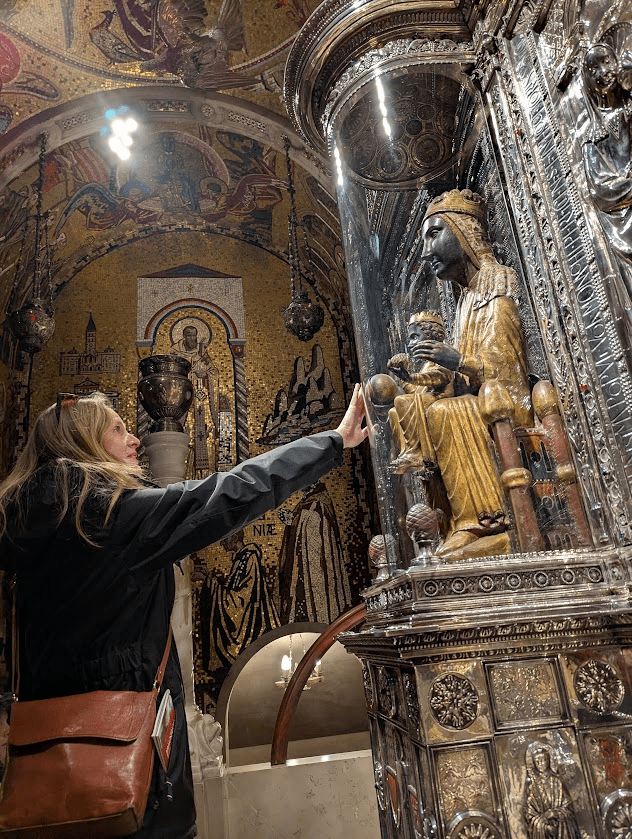
As biblical witness also attests, God seems to have no problem allowing animals to be his mouthpiece. The donkey did not follow the Moor. Ignatius carried on to the monastery of Montserrat and stayed for several days in prayer, confession and meditation. On his last night in the monastery, he spent all night in vigil at La Moreneta, a wooden statue of the Madonna and Child that mythoogy says dates back to the 800s, her face mysteriously darkened by age and candle smoke. In the morning, he hung his sword on the shrine, traded his fine clothes with a local beggar and committed his life fully to God.

I want and I choose what better leads to God’s deepening his life in me.*

***

Going in to see a Catholic icon over a thousand years old in a monastery many hundreds of years old in the mountains of Spain feels very much like – well, going to see a Catholic icon in a monastery in the mountains of Spain, actually. Quiet. Ornate. Engorged with symbolism. Both familiar and otherworldly all at once. Beautiful and garish.

Like in so many other anchor points of religion, I felt such a gravity pushing and pulling me, like both poles of a magnet working on me at once. How starved for God we humans have always been to make such bastions of our faiths. We have created such beautiful tools to reach him. Such deadly, beautiful tools. Cathedrals, Kaabas, prayer mats and pews, rituals, rites and rules. Culture and clothing and body language. Everything we can to mark what is good and true and real and in. As though that was ever our job to begin with.

And what humility he has – what fathomless grace – to allow himself to be found in these tools we craft again and again. Like languages we confuse for the real thing. Words struggling to contain something more.

I cringed against the glare of light off of some of the haunting statues we passed on our climb up to La Moreneta. But when I ran my palm against the smooth wood of the orb she held outstretched, like tens of thousands of pilgrims before me, her child balanced peacefully in her lap, I cried. I’m not sure why. Just like I wince in my headscarf when I cannot pass into the main prayer room of the grand mosque because I am a woman, but get goosebumps when everyone kneels together, shoulder to shoulder in perfect unity. Just like when I roll my eyes at the smoke and lights behind the praise team dressed as though for a photoshoot in a wheat field, but weep through every single verse of “Waymaker”.

Believe me, dear woman, he says to me. The time is coming – in fact – it’s here now – when it will no longer matter whether you worship on this mountain or that mountain. The Father is looking for those who will worship in spirit and truth. For God is Spirit, so those who seek him must find him in that way.*   

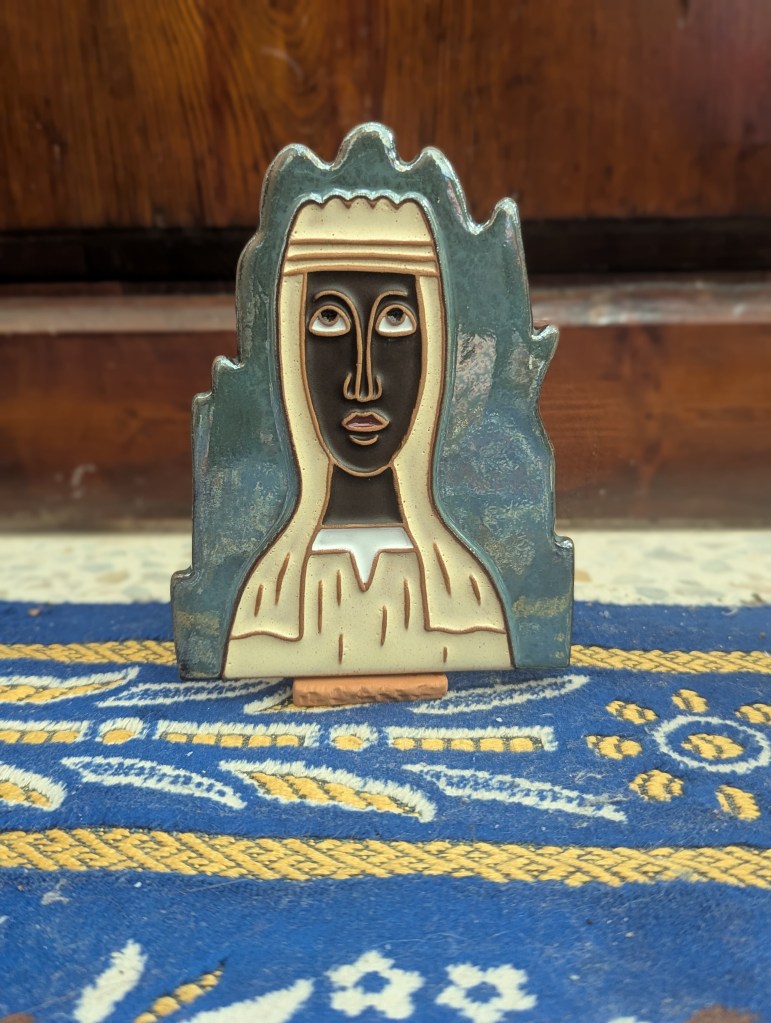
I didn’t leave anything physical behind with Mary, though I chuckled thinking how my Marian theology probably aligns more closely with the Moor’s than with Saint Ignatius. But I still bought a terracotta piece painted with her dark face. It sits now not far from my prayer mat. The one I bought outside the Ghaddafi mosque in Uganda many years ago. The mat is dusty with sage ash from the incense I burn when I pray. Each one pulls me in in some small way. Pushes me back out. Moves me along in this ebb and flow of prayer we are called to live without ceasing.  

Religions. Tools. Languages.

Things we have to do. Things we get to do.

Mountains.

Spirit and Truth.     

Full of chorizo and Spanish wine, I am now back in the land of lamb and rosewater. (My youngest is famous in family lore for having once asked when we landed in a new country and asking in all innoccence before breakfast, “Papa, is this a bacon country?” We observe most cultural norms in our travels. I’m not saying we don’t have our favorites). Ramadan will begin soon. As will lent.

May the Father continue to find what he is looking for in each of us this week. And may we find him, in all the shocking places he is willing to be found.

*Ignatius’ “Principle and Foundation”, comtemporary tradition; John 4

Manywheres

Monday morning, I took a quick scan of the sports section of the BBC on my phone while I made my coffee and fed the cat. After I woke up three sleepy girls, I gave them the highlights while they nursed their cereal bowls.

Eagles destroyed the Chiefs (yes, that’s the Taylor Swift one). Patrick Mahomes was sacked six times (yes, that’s the guy Babu likes). Someone named Jaylen Hurts won the MVP (it means “most valuable player”).

It’s not that I feel any particular need for my girls to be up on their Super Bowl stats, I assure you. But I looped them into the broad brushstrokes for the same reason that we loosely follow Taraji football here and sport the jerseys like diehard fans. It’s the same reason we watched every NBA playoff game while we were in Texas this summer and why we briefly got into women’s handball tournaments when we first moved here. It’s for the same reason that my dad and sister followed Champions League soccer growing up in East Africa and why I skipped class in high school to watch the national Bangladeshi cricket team play the Kenyan national team at a pitch not far from our school (well, I had other reasons that day too but that’s a story for another day.)

It’s because being able to follow along with the passions of the people and cultures around you, quite frankly, feels good. It feels like connection. And in general, sports is a stupid easy way to connect. Maybe it becomes your passion too (I mean, have you seen a handball match?). Or maybe you just move a smidge closer to seeing through someone else’s eyes. Either way, it’s a tried and true life hack for anyone navigating the world of cross-cultural living. And even though my girls go to a school in North Africa, there are enough Americans in their classes that the Super Bowl smack talking had been building for days.

They came home from school happy. Daughter Number 1: “By the way, thanks so much for giving a heads up about the how the Super Bowl went, Mama. It was so nice to be able to engage in the conversation today.”

Cue, the mom pride. That’s right, I’m a good mom for making sure my kids know stuff.

Daughter number 2 chimes in: “Yeah, it was so much fun to know what the Americans were talking about. Although, someone said something about kicking a field goal…I didn’t know you could kick the ball in baseball!”

Baseball.

You can’t win them all.

***

Honestly, the Super Bowl was a delightfully easy thing to loosely tie into their world this week. Most stuff is much harder. I often wrestle with how much to raise my daughters’ eyes to take in the heartbreak of the world as I flick through the news. Hostages, peace deals, refugees, migrants, elections, hate-speech, deportations, racism. These are not on the list of advisable things to chat with your kids about before breakfast.

But they have had classmates who have come to school weeping because of grandparents injured in missile strikes in nearby countries. They have had to miss school because of protests at embassies. They remember what it’s like to live in a warzone and love many people who live there still.  

I want them to know what is happening in their country too. I want them to feel connected enough to be troubled by what is worthy of shame and proud of what is worthy of recognition. I want them to have a firm grasp on their national heritage while also holding it with an open palm. I want them to always know where their true allegiance lies.

As if I could shield them from the world even if I wanted to. I check my 13-year old’s phone every once in a while, take a quick glance through her chat history and email. And buried between Taylor Swift lyrics and math homework is conversation about the world with her friends. It’s leaders. The multiple directions it’s struggling to lurch in. It turns out, along with sports, political dismay is a very bonding experience too. Everybody gets it. In fact, Americans are arguably just a bit late to the game. Much of the world is already very well acquainted with heads of state that create a vague sense of horror. We’ve just always assumed we were different. That we could do better.  

***

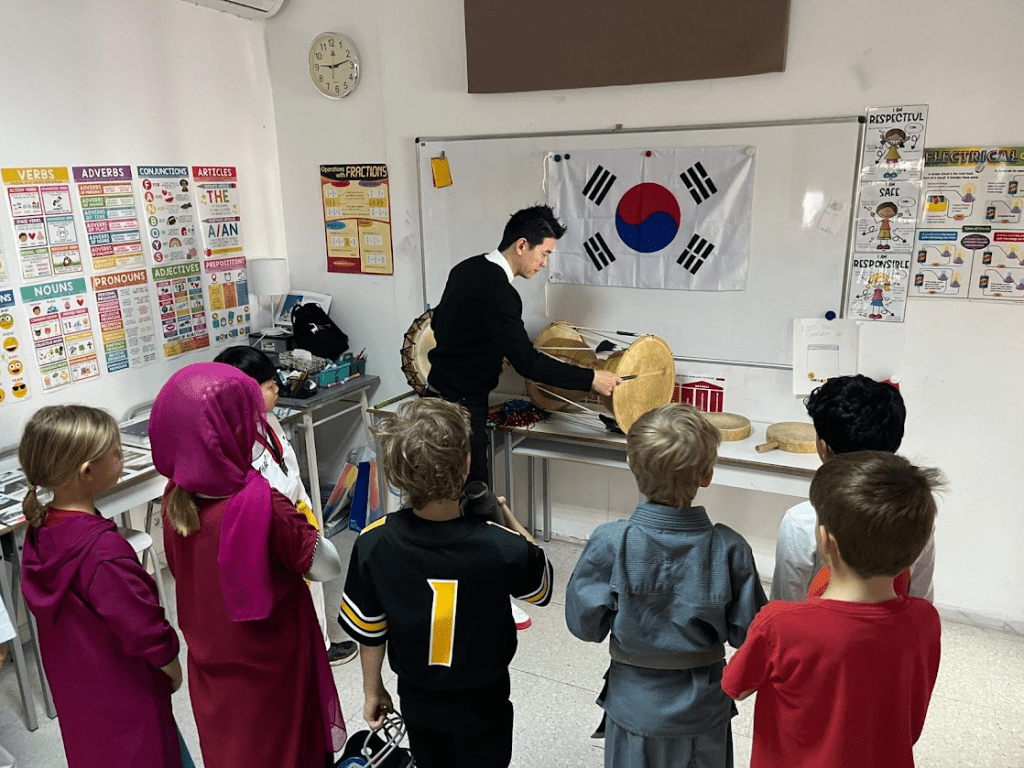
Last Friday was International Day at the girl’s school, one of the best days of the school year as far as they are concerned. Everyone’s is invited to come to school dressed up in the national dress of their passport country or a country that they have been deeply connected to. The kids move through various stations throughout the day, eating food, playing games, learning songs from all corners of the world. The Canadians usually have maple cookies and a competition to see who can hold their hands in a bucket of ice water the longest. The French station had crepes and Nutella. But the Korea station is always everyone’s favorite. Kimbap is like its own currency at this school. The number of times I open my kids’ lunchboxes to see the remnants of rice and seaweed and realize the cashed in their cookies or fruit or sandwich with willing classmates.   

Every year it gets a little harder for my girls to decide what to wear, though they have always landed on the same thing. Do they go with the East African countries they were born in? Or the one they spent most of their lives in? Or the one in which they spent a couple of golden years, post-evacuation? Or, the one they live in now? Or their passport country?

And every time they pull out my old tobes. We iron them, reminisce on where we bought them, where we remember wearing them. And they traipse to school in their flowing fabric from another life, wrestling to keep them put on their heads, tennis shoes peeking out from ankle length folds. At the end of the say, they always choose to carry the Sudanese flag in the parade of nations.

The beautiful thing is they are one of many kids that hold various parts of themselves and their family’s stories in tension on International day. The Peruvian kid worn an Algerian dress. An American came wearing her clothes from Morocco and carried its flag. Tanzania, France, Ethiopia and Jordan have all been represented by kids with deep connections to those places but whose grandparents may have never imagined they would step outside the boundaries of their home countries.

And every international day, I slip my sunglasses on when those kids come out in a riot of color and noise, proudly carrying a patchwork ribbon of flags across the schoolyard, hoping my ugly crying is just a little less obvious. Because, while it’s simplistic and sentimental, in a world that sometimes feels like it is burning to the ground even faster than normal, it’s so deeply refreshing. Sometimes you need to see a bunch of school kids screaming their heads off cheering for each other’s countries. Syria and Tunisia. The United States and Ukraine. You need to see them celebrating multiple pieces of their identity as they claim multiple stations as “theirs”, cultivating a generation who can see from manywheres.